North American Trade & Tariff Insights
Stay up to date on the latest news, insights, perspectives, and resources from our customs and trade policy experts.
-

-

-

-

-
CopyToClipboard
Customs and trade compliance feature story
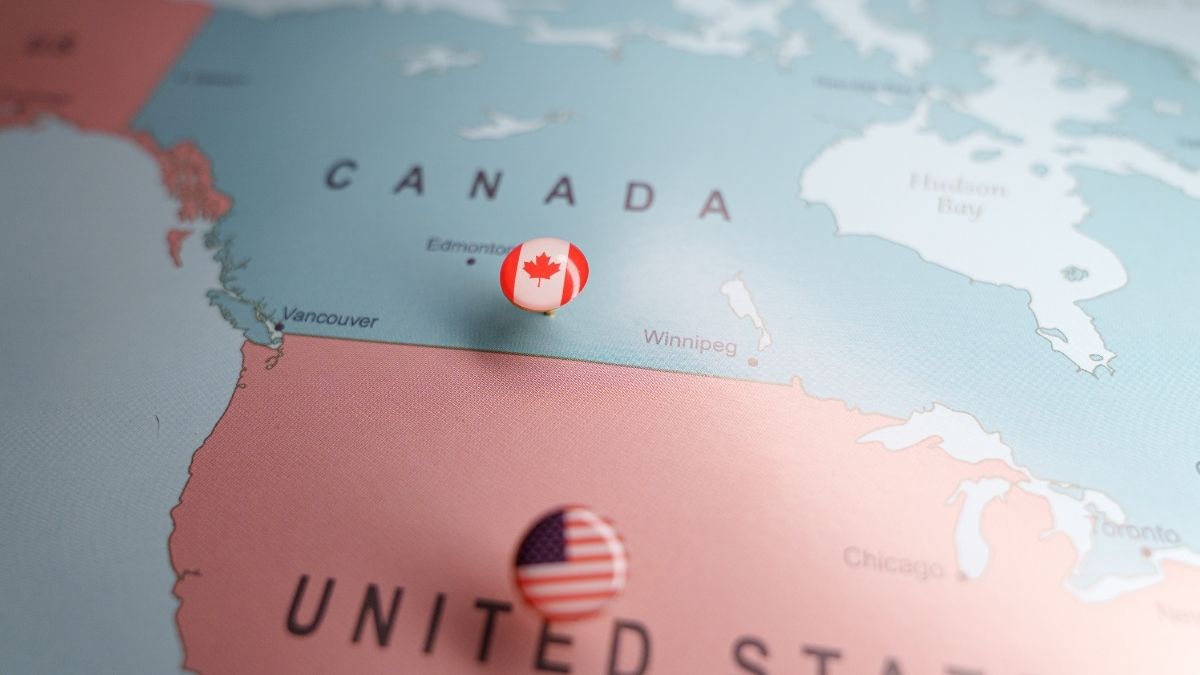
U.S. Expands Section 338 Actions on Canada with New Import Bans and Tariff Changes
Customs and trade news
Canadian Prime Minister Mark Carney said Canada does not plan to retaliate further against the latest U.S. import bans and Section 338 product additions. He described the measures as relatively modest compared to other recent U.S. actions.
Instead, he emphasised strengthening Canada's economy and diversifying trade relationships as the preferred response. Carney expressed willingness to resume negotiations with the United States, provided any agreement respects Canadian sovereignty, existing trade agreements and cultural priorities.
He also highlighted the importance of securing a stable long-term arrangement for the automotive sector while seeking greater predictability in bilateral trade relations.
The Canadian province of New Brunswick announced it will ban U.S. goods and services from provincial contracts valued above $5 million CAD starting 1 October 2026, citing recently imposed U.S. tariffs and import bans. The move is part of a broader effort to prioritise Canadian suppliers, review supply chains and explore additional restrictions tied to natural resource licensing.
Ontario also expanded financial support programmes for businesses affected by the trade conflict, while Canadian leaders continued defending retaliatory tariffs against U.S. measures.
Customs and Border Protection says it uses artificial intelligence to support cargo screening, contraband detection, anomaly identification and other operational activities across the agency. In its August 2026 OFO Strategy 2026-2030, CBP identified intelligence-based targeting and advanced analytics, including AI and emerging technologies, as priorities for strengthening trade and border security operations.
A White House report released 13 August described an AI-enabled "Detective Border" concept that would support CBP by analysing delivery data, routing histories, product classifications, ownership relationships and other indicators to identify potential transshipment risks and high-risk deliveries.
CBP is requesting public comments by 1 December on several initiatives related to enhanced customs enforcement, including foreign export documentation requirements, supply chain traceability technologies and expanded CTPAT programme standards.
The agency is evaluating whether importers should provide foreign export records to support valuation and enforcement efforts, while also exploring alternatives to the current Manufacturer Identification (MID) code and potential expansion of Global Business Identifiers (GBIs).
CBP is seeking feedback on how technologies such as artificial intelligence and digital traceability tools can be integrated into supply chain oversight and ACE, particularly to improve visibility, data verification and risk targeting. The initiative signals continued movement toward greater supply chain transparency, stronger importer accountability and increased use of technology-driven compliance programmes.
Explore all freight market updates
To deliver our market insights to our global audiences in the timeliest manner possible, we rely on machine translations to translate these insights from English.
Our information is compiled from a number of sources that to the best of our knowledge are accurate and correct. It is always the intent of our company to present accurate information. C.H. Robinson accepts no liability or responsibility for the information published herein.
Be connected
Stay in the know with email notifications
 Actionable freight insights
- Expert market perspective
- What’s next in logistics
Tools and resources
U.S. Reciprocal Tariff Tracker
Wondering where U.S. reciprocal tariffs stand? Our tracker summarizes the latest changes with top U.S. trade partners.
U.S. Tariff Timeline
Stay on top of the quickly changing U.S. trade landscape with a chronological list of recent key tariff updates, policy changes and trade negotiations.
Incoterms® Tool
Who bears the risk in your transaction, and when does the risk transfer from buyer to seller? Review these shipping terms.
Customs Clearance Checklist
Conducting an annual review of your customs processes can help you rapidly realign processes to avoid delays or penalties. These 20 steps can help you review various areas of your trade compliance program.
PARS Tracker/Rapid Lookup Service
The Pre-Arrival Review System (PARS) Tracker lets truckload and LTL carriers moving freight from the United States to Canada search for a PARS number—a way to confirm that C.H. Robinson has submitted an entry for release of the cargo from the Canada Border Services Agency (CBSA) and that the entry has been accepted by CBSA. Once an entry has been accepted by CBSA, the carrier may proceed to the border for final processing and crossing into Canada.
PAPS Tracker
The Pre-Arrival Processing System (PAPS) Tracker lets truckload and LTL carriers moving freight from Canada to the United States search for a PAPS number—a way to confirm that C.H. Robinson has submitted an entry for release of the cargo from U.S. Customs & Border Protection (CBP) and that the entry has been accepted by CBP. Once an entry has been accepted by CBP, the carrier can proceed to the border for final processing and crossing into the United States.
Canadian Logistics Forms and Links
Locate forms and resource links that support freight forwarding, customs brokerage and surface transportation in Canada.
Canadian Exchange Rate
This interactive database allows you to view the international customs exchange rates to and from the Canadian dollar for the past year. This can be useful in projecting the cost of shipments to and from various countries.
U.S. Logistics Documents
Explore forms and other documents that support your import and export strategy into and out of the United states.
Trade Strategies to Consider
Compare several trade strategies by their deployment speed, cost to implement, and risk level. Find the ones that help you properly mitigate risk and streamline processes to better control costs.
Client Advisories
Mitigate tariff risk, offset duties, and gain peace of mind.
Stay up to date with client advisories
Receive notices on changing regulations when they happen.
Frequently asked questions
General
Q: What is a tariff?
Tariffs or duties are taxes assessed on imports of foreign goods, paid by the importer to the U.S. government, and collected by U.S. Customs and Border Protection (CBP). Current U.S. tariff rates may be found in the Harmonized Tariff Schedule (HTS) maintained by the U.S. International Trade Commission (ITC). The U.S. Constitution grants Congress the sole authority to regulate foreign commerce and therefore impose tariffs, but, through various trade laws, Congress has delegated authority to the president to modify tariffs and other trade restrictions under certain circumstances. 1
Q: What are trade remedies?
According to the U.S. Customs and Border Protection (CBP), trade remedies are laws and actions that countries use to protect industries from unfair trade practices, such as additional tariffs, quotas or prohibiting certain imports.
Q: Does U.S. Customs and Border Protection (CBP) pay interest when refunding duties previously paid?
Yes! CBP does pay interest from the date the original money was deposited. The current interest rates are published in the Federal Register on a quarterly basis. Review the most recent Federal Register Notice for the latest rates.
Q: How do trade remedies impact import costs, credit limits and bond amounts?
A Trade remedies can affect business in many ways. We recommend using automated clearinghouse (ACH) and periodic monthly statement (PMS) to pay your duties, taxes and fees directly to CBP. These methods can help to manage your credit lines and payments effectively.
Additionally, make sure that you determine your bond amount. An insufficient customs bond can create significant delays for your supply chain and result in a negative financial impact to your business.
Section 201: Cause/threat to domestic industry
Q: What is Section 201?
Section 201 of the Trade Act of 1974 allows the president to impose temporary duties and other trade measures if the U.S. International Trade Commission (ITC) determines a surge in imports is a substantial cause or threat of serious injury to an U.S. industry.
Q: How does Section 201 affect trade?
A Section 201 of the Trade Act of 1974 allows the United States to impose trade restrictions, like tariffs or quotas, on imported goods that are causing or threatening to cause serious injury to a domestic industry. Essentially, it can lead to increased costs for imported goods, potentially protecting domestic producers but also affecting consumers and international trade flows.
Section 232: National security concerns
Q: What is Section 232?
Section 232 of the Trade Expansion Act of 1962 allows the president to adjust imports if the Department of Commerce finds certain products are imported in such quantities or under such circumstances as to threaten to impair U.S. national security. In 2018, tariffs were imposed under Section 232 on steel imports at 25% and aluminium imports at 10%.
Q: How may Section 232 impact trade?
Effective 12 March 2025, a 25% tariff applies to steel and aluminium imports and some steel and aluminium derivatives.
The Section 232 tariffs can have a significant impact to a company’s bottom line and have resulted in billions of dollars collected in tariff revenue since they went into effect in 2018.
Q: If Section 232 tariffs have been in place since 2018, what are the new tariffs in 2025?
There have been several key changes to the Section 232 tariffs in 2025, such as the aluminium tariffs increasing from 10% to 25%. As of 12 March 2025, steel and aluminium imports (including some derivatives) are also now subject to the Section 232 tariffs, regardless of the country they are imported from.
Q: Are there any duty exclusions, exemptions or quotas for Section 232?
No. All General Approved Exclusions (GAEs) and country-level ‘alternative arrangements’ (including exemptions, absolute quotas and tariff-rate quotas) are revoked as of 12 March 2025.
However, any importer-specific product exclusions granted remain in effect until their expiry date or until their excluded volume is imported, whichever occurs first. The process for requesting exclusions terminated on 10 February, 2025.
Q: What countries does Section 232 apply to?
Effective 12 March 2025, the Section 232 tariffs on imports of steel and aluminium (including some derivatives) apply to all countries.
Q: What are steel and aluminium derivatives and are all derivatives subject to the Section 232 tariffs?
Steel and aluminium derivatives are downstream products that contain steel or aluminium. Only some steel and aluminium derivatives are subject to the Section 232 tariffs.
Q: How are goods subject to the Section 232 duties treated when they are admitted into a Foreign Trade Zone (FTZ)?
Unless goods are exported from the United States, goods entered into an FTZ must be entered under “privileged foreign status” and will require payment of duty at the time of entry into the U.S. Commerce.
Q: How do shippers calculate the value of the aluminium or steel content in a derivative article?
The producer typically will calculate the total value of the steel or aluminium content in the derivative article or a supplier may provide a Bill of Material (BOM) breaking out the steel or aluminium content value. No matter how the value is calculated, it is important that it is supported with documented proof that can be provided to CBP.
Section 301: Unfair trade practices
Q: What is Section 301?
Section 301 of the Trade Act of 1974 (Section 301) allows the United States Trade Representative (USTR) to suspend trade agreement concessions or impose import restrictions if it determines an U.S. trading partner is violating trade agreement commitments or engaging in discriminatory or unreasonable practises that burden or restrict U.S. commerce.
Q: How may Section 301 impact trade?
Section 301 may affect trade in several ways. Most notably, the tariffs imposed on products from China have significantly affected shippers—resulting in billions of dollars in tariff revenue collected since the tariffs went into effect in 2018.
Q: How do I find out if my product is subject to Section 301 tariff duties?
Enter the product’s harmonized tariff schedule (HTS) classification on the USTR website. Talk to your Trusted Advisor® expert at C.H. Robinson to learn more.
Q: Are Section 301 duties eligible for drawback?
As noted in CSMS Message 18-000419, Section 301 duties are eligible for duty drawback. Drawback is the refund of certain duties, internal revenue taxes, and certain fees collected upon the importation of goods. Such refunds are only allowed upon the exportation or destruction of goods under U.S. Customs and Border Protection supervision.
Q: Are products entered under the Section 321 de minimis exemption (under $800) subject to Section 301 duties?
No, not right now. Goods properly entered under Section 321 are not subject to Section 301 duties. Please note that a formal entry is required if a shipment contains merchandise subject to AD/CVD. Goods subject to AD/CVD do not qualify for Section 321.
Something to keep an eye on: U.S. Customs and Border Protection (CBP) submitted a proposal in early September 2020 to the Office of Management and Budget that would eliminate the $800 de minimis exemption for goods subject to Section 301 tariffs. Additionally, in January 2022, the Import Security and Fairness Act was introduced to address Section 321 shipment activity. Significant changes proposed within this legislation are as follows:
- Reverses Congress’s decision to raise the threshold to $800 from the previous threshold of $200
- Prohibits goods from countries that are both non-market economies and on the United States Trade Representative’s (USTR) Watch List from using de minimis benefits
- Prohibits goods subject to enforcement actions (e.g., Section 301 tariff measures) from using the program
Remember, Section 321, 19 USC 1321 is the statute that describes de minimis. De minimis provides admission of articles free of duty and of any tax imposed on, or by reason of importation, but the aggregate fair retail value in the country of shipment of articles imported by one person on one day and exempted from the payment of duty shall not exceed $800. The de minimis threshold was previously $200 but increased with the passage of the Trade Facilitation and Trade Enforcement Act (TFTEA).
Q: Are products of Hong Kong subject to the additional Section 301 duties against China?
No. Additional duties imposed by the Section 301 remedy only apply to articles that are products of the People’s Republic of China (ISO Country Code CN). Imported goods that are legitimately the product of Hong Kong (HK) or Macau (MO) are not subject to the additional Section 301 duties. Please note that Section 301 duties are based on country of origin, not country of export. 2
Q: Do Section 301 (China) duties still apply if I ship goods to another country, such as Canada or Mexico, and have them packaged there before entering the commerce of the United States?
Yes. Basic changes/processes such as packaging, cleaning, and sorting would not change the country of origin to be declared in most cases. The origin would still be China and therefore the Section 301 duties would still apply.
References
- Congressional Research Service – Trump Administration Tariff Actions (Sections 201, 232, and 301): FAQs
- Section 301 Trade Remedies Frequently Asked Questions
- Congressional Research Service - Section 301: Tariff Exclusions on U.S. Imports from China
All content and materials discussed herein are for informational purposes only and do not constitute legal advice. You should always independently check the related Code of Federal Regulations (CFR) and, if needed, consult with the applicable Federal Agency (e.g. CBP, USTR) and/or external counsel where any question or doubt exists. Information on this site is the property of C.H. Robinson. Any transmission or use without C.H. Robinson’s permission and approval is not allowed or authorized.